Tomatoes are forgiving plants, but timing matters. A tomato plant that is started too early, transplanted into cold soil, watered inconsistently, or left unsupported can still produce, but it will usually be more stressful than it needs to be.
Eight to ten weeks before planting outside
Decide whether you are starting seeds or buying transplants. If starting seeds indoors, use warm conditions, strong light, and clean seed-starting mix. Avoid huge pots at the beginning; seedlings usually grow better when potted up gradually. For general indoor setup, see the seed-starting guide and the existing seed starting mix article.
Two to three weeks before transplanting
Begin hardening off only when outdoor conditions are reasonably stable. Tomatoes dislike cold soil and cold nights. A plant that sits in chilly ground often pauses rather than growing faster. Prepare supports before transplant day so roots are not disturbed later.
Transplant week
Plant deeply enough that part of the stem is buried, or use a trench method if the plant is tall and leggy. Tomatoes can form roots along buried stems, which is why many gardeners use deeper planting. The article on planting tomatoes sideways explains that method in more detail.
Early growth: watering and support
Water deeply and consistently. Shallow daily watering encourages weak surface roots, while extreme wet-dry swings can stress fruit development. Containers dry faster than raised beds, especially in hot weather. If you grow without garden beds, the guide to growing tomatoes in pots is a useful companion.
Midseason: pruning, feeding, and airflow
Remove lower leaves that touch the soil, tie stems before they flop, and keep airflow in mind. Do not strip the plant bare; leaves feed the fruit. A modest, consistent feeding routine is usually better than sudden heavy fertilizer. Watch for curled leaves, pale new growth, blossom drop, and pest pressure as early signs that conditions need attention.
Late season: ripening and harvest
Pick tomatoes when they show mature color and give slightly under gentle pressure. Some tomatoes can finish ripening indoors after the breaker stage, especially when weather turns hot, cold, or wet. For timing details, read when to pick tomatoes and how to ripen tomatoes in the garden.
Common tomato calendar mistakes
- Starting seeds so early that seedlings become root-bound.
- Transplanting before nights are warm enough.
- Waiting too long to add cages, stakes, or trellis support.
- Watering irregularly during flowering and fruiting.
- Leaving diseased lower leaves in contact with soil.
A tomato calendar is not a rigid schedule. It is a sequence of decisions. Watch the plant, the soil, and the weather, then adjust the timing to your own garden.
Choose the right tomato type for the space
Before following any tomato calendar, decide whether you are growing determinate, indeterminate, dwarf, cherry, paste, or slicing tomatoes. Determinate varieties often produce in a shorter window and can be easier in containers. Indeterminate varieties keep growing and need stronger support. Cherry tomatoes are often more forgiving for beginners, while large slicing tomatoes usually demand steadier watering and fertility.
Soil preparation before transplanting
Tomatoes grow best in soil that drains well but does not dry out immediately. Work compost into garden beds before planting, but avoid creating a rich pocket that roots never leave. In containers, use a potting mix rather than dense garden soil. A container tomato needs enough volume to buffer heat and moisture swings; tiny pots make watering harder and fruiting less reliable.
Support systems
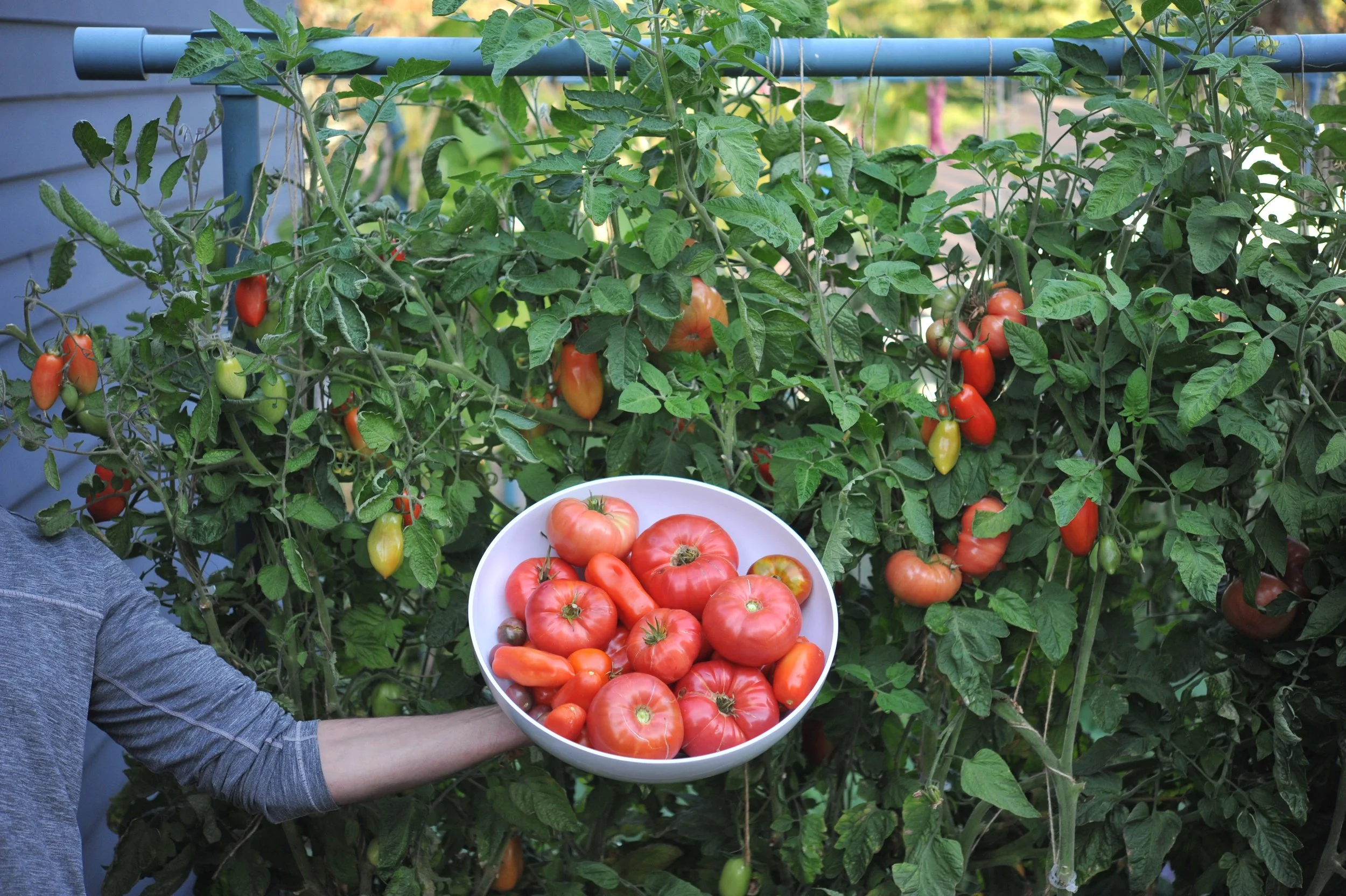
Install support early. Cages, stakes, Florida weave, string trellises, and panels can all work, but the system should match the variety. A small determinate tomato may be fine in a sturdy cage. A vigorous indeterminate plant needs a taller, stronger setup and regular tying. Waiting until the plant falls over often breaks stems and exposes fruit to soil.
Pruning with restraint
Pruning is useful, but more is not always better. Remove leaves that touch soil and thin crowded growth enough to improve airflow. Avoid stripping so much foliage that fruit is exposed to sunscald. In hot climates, leaf cover protects tomatoes during intense sun. The plant needs enough leaves to feed the fruit.
Watering during flowering and fruiting
Consistency matters most once flowers and fruit appear. Big swings between dry and soaked soil can contribute to fruit cracking and stress. Mulch helps garden beds stay even. Containers may need daily checks in hot weather, but they still need deep watering rather than a quick splash.
End-of-season decisions
Late in the season, remove diseased leaves, stop encouraging excessive new growth, and focus on ripening existing fruit. If cold weather is close, pick mature green or breaker-stage tomatoes and let them finish indoors. A calendar helps, but weather makes the final decision.